



Branding
Feb 28, 2026

Why do some brands appear beautiful, but they don't develop, and others control the market?
The reason is in the difference between "brand identity" and "brand strategy," two terms that are used as synonyms; however, at their core, they are not similar in their intent and consequences.
When you are creating a brand, growing a business, or changing brands, understanding the distinction between brand identity and brand strategy can save you time, money, and confusion. Let us put it down straight and in plain English.
What is brand identity?
Brand identity refers to how your brand appears and feels and sounds to the external environment. It is the expressive and physical manifestation of your brand.
This contains your logo, colors, typography, imagery, tone of voice, and visual identity in general. It is what will come to their mind as soon as they come across your brand online, on packaging, or in advertisements.
Familiarity and trust are a result of the strong brand identity. When individuals perceive the same visuals and messages regularly, they begin to have feelings and anticipations associated with your brand.
Brand identity will answer such questions as,
- What is the personality of the brand?
- How are people supposed to feel when they come in contact with the brand?
- Although brand identity is a powerful factor, it is effective in situations where it is developed on a strong base; here is where brand strategy is relevant.
Learning about brand strategy
Brand strategy is the plan on a long-term basis for the success of your brand. It determines the purpose of existence, the target audience of your brand, and how it will be different in the marketplace.
As compared to brand identity, brand strategy is not necessarily visible. It directs choices, messages, positioning, pricing, and communication of all platforms.
The strategy of the brand includes factors like brand purpose and vision, target audience definition, competitive differentiation, positioning of the brand in the market, core brand values, and long-term business goals.
Brand strategy makes certain that each design decision, campaign, and message is directed towards a larger objective. It is necessary even to the most beautiful brand identity because otherwise it can be directionless.
Brand strategy vs. brand identity, the essence of the difference
Brand identity vs. brand strategy can be understood in the simplest way, which is this:
- Brand strategy is the brain.
- Brand identity is the face.
Brand strategy comes first. It determines the way your brand thinks, speaks, and acts. Brand identity takes such a strategy and brings it to images and experiences that people can observe and recall.
Where brand identity gives the impression of what you appear to be, brand strategy gives the impression of why they should pursue you.
This difference is crucial. It is a common practice among businesses to dive straight into the logo design without establishing their strategy, and this makes them inconsistent in
branding and ineffective in the market.
The reason why brand strategy precedes brand identity
The most typical error brands commit is putting the emphasis on beauty prior to understanding. Brand building can give you a good appearance but is meaningless when you build first and think later.
Brand strategy provides guidance. It will make sure that your brand identity will be based on your values, audience needs, and competitive advantage. Branding is purposive, not ornamental, when it arises out of strategy.
As an example, your palette, typography, and tone should all be in line with the expectations of your audience and your position in the market. Such alignment can only occur when strategy is properly defined.
The relationship between brand identity and brand strategy
The brand identity and brand strategy are inseparable, even though they are different. Identity is informed by strategy; strategy is supported by identity.
When both work together:
- Your images convey the appropriate message.
- Your communications are identical on all platforms.
- Your brand develops to be familiar and reliable.
- Marketing is also made more effective.
Strong brands do not make a decision between brand identity vs. brand strategy; they make investments in both, in the proper sequence.
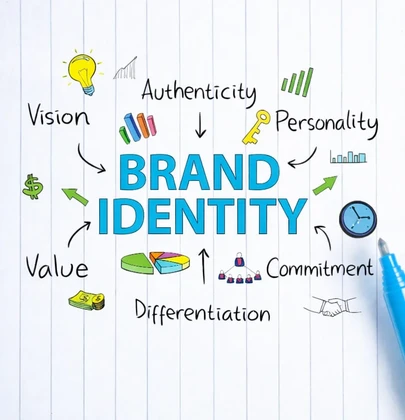

Brand and brand identity. what is more important?
Brand identity plays a role; however, it cannot take the place of brand strategy. Identity draws focus, but strategy creates loyalty and long-term expansion.
Without strategy:
- Branding is not consistent.
- Communication is disjointed.
- Marketing lacks focus.
- The growth becomes erratic.
Brand identity is accorded meaning by brand strategy. The combination makes them produce a brand that does not only work well in the market but also looks good.
Does a business survive without a distinct brand strategic plan?
It can achieve success in the short term, though without strategy it is hard to continue its growth over time. Companies that lack a brand strategy tend to have issues in differentiation, customer loyalty, and lack of consistency in communication.
The brand strategy is a well-known method whereby businesses adjust to the changes in the market, scale efficiently, and be relevant in the long run. It gives a blueprint that leads the branding, marketing, and business decisions.
The relationship between brand positioning and the large picture
Brand positioning is one of the main components of brand strategy. It determines the perception of your brand in the mind of the customers as opposed to others.
Positioning provides the answer to one important question:
- Why will a person purchase your brand and not another?
Brand identity can then be used to support positioning. Once the positioning is known, colors, font, imagery, and tone are used in a way that appeals to your audience.
Final reflection
Brand Identity vs. Brand Strategy: An Important Insight Towards Creating a Lasting Brand. Direction, purpose, and positioning are determined by strategy. That strategy is realized with the help of identity through images and experiences.
When these two are combined, your brand will be clear, consistent, and compelling.
When you want to create or develop a brand that is not only appealing but also strategically sound, then
Brands N Codes would enable the brands to match the strategy with the identity so that your brand does not just exist but is also known.